
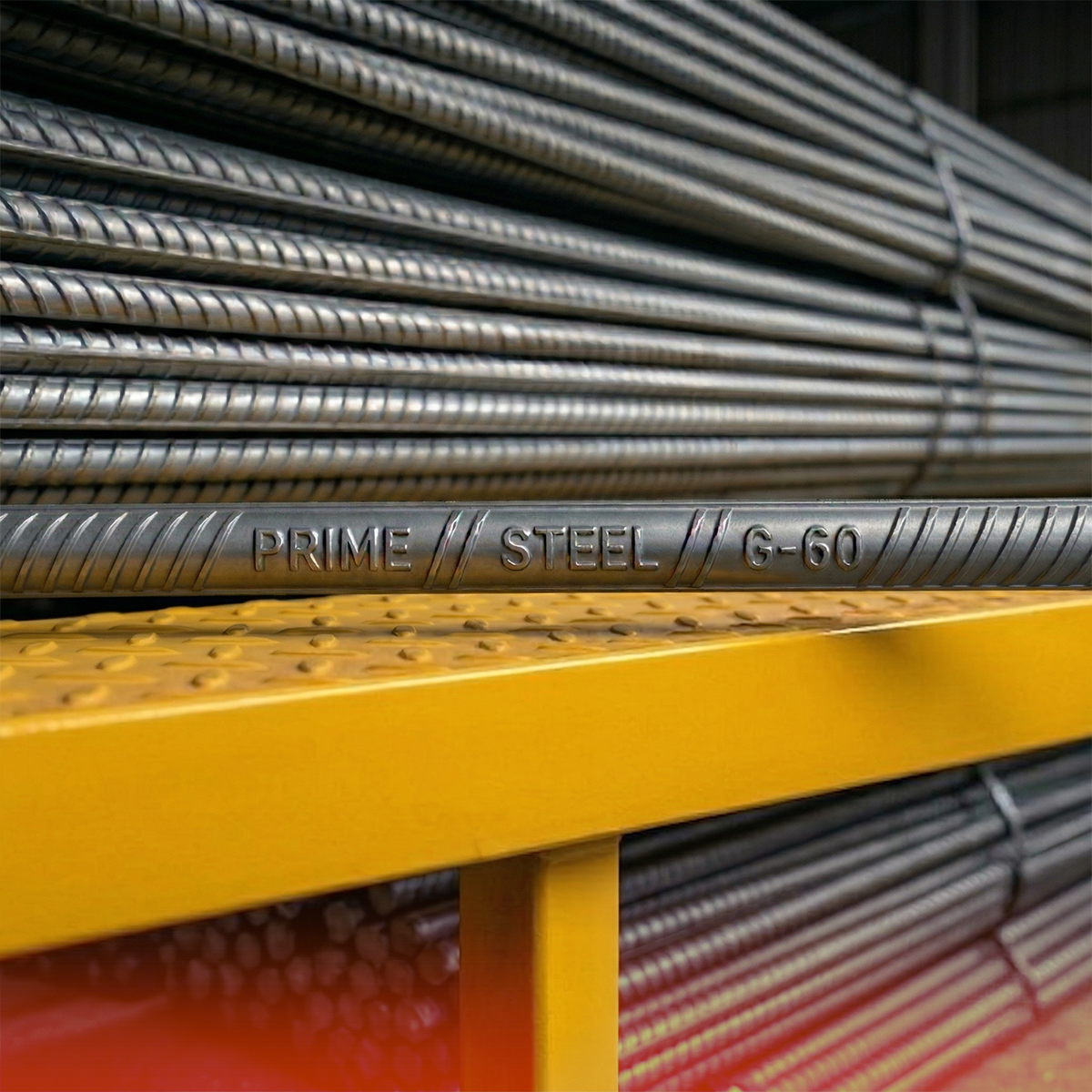
Not all steel is created equal — and the difference often begins not with the raw material, but with the manufacturing process. In Pakistan's steel industry, there is a significant divide between mills using outdated ingot-casting methods and those employing modern Continuous Casting Machine (CCM) technology. Prime Steel Industry uses CCM technology — and in this article, we explain exactly why that matters for the quality of every rebar that leaves our facility.
Traditional Ingot Casting vs. CCM: The Key Difference
In traditional ingot casting, molten steel is poured into large moulds, allowed to solidify into ingots, and then reheated and rolled. This multi-stage process introduces several quality risks:
- Segregation of alloying elements during solidification
- Internal voids and porosity
- Inconsistent chemical composition across the ingot
- Significant material loss during cropping of defective ends
Continuous Casting Machine (CCM) technology bypasses these limitations entirely. Molten steel is directly cast into semi-finished billets in a continuous, controlled process — eliminating the ingot stage.
How CCM Works — Step by Step
The CCM process at Prime Steel Industry follows a precise sequence:
- Molten steel from the induction furnace is transferred to a ladle
- Steel flows from the ladle through a tundish — a buffer vessel that maintains consistent flow and temperature
- Steel enters the water-cooled copper mould, which gives the billet its cross-sectional shape
- The solidifying billet is continuously withdrawn and guided through a series of rollers and spray-cooling zones
- The fully solidified billet is cut to length by automatic torches and sent directly to the rolling mill
CCM eliminates the reheat cycle required in ingot casting — saving energy, reducing oxidation, and producing a more homogeneous billet.
Quality Advantages of CCM Technology
The structural and mechanical benefits of CCM-produced rebars are measurable and significant:
- Uniform chemical composition throughout the billet — no segregation zones
- Higher internal density — no shrinkage voids or porosity
- Consistent cross-sectional dimensions — tighter weight tolerance per meter
- Superior surface quality — cleaner, more uniform rib geometry
- Better ductility and bendability at the construction site
- More predictable yield and tensile strength — critical for structural engineering calculations
CCM and ASTM A615 Compliance
Meeting ASTM A615/A615M specifications requires not just correct chemistry but consistent mechanical properties across every bar in a batch. CCM technology makes this consistency achievable at scale. Traditional ingot-cast mills struggle to maintain batch-to-batch uniformity — which is why many fail third-party testing despite appearing compliant on paper.
Prime Steel Industry's CCM-produced billets are the foundation of our ASTM compliance. Every billet is tested in our Spectro-Lab before rolling, ensuring that the chemistry is within specification before any bar reaches the market.
Production Capacity and Efficiency
Our CCM installation supports a daily production capacity of 300 metric tons of finished rebar. This continuous, automated process means:
- No production delays from ingot reheating cycles
- Consistent supply for large-scale and time-critical projects
- Lower energy consumption per ton of steel produced
- Reduced waste and material loss compared to ingot methods
Why This Matters for Contractors and Developers
When you order rebar from Prime Steel Industry, you are not receiving steel from a batch that was produced inconsistently and sorted after the fact. You are receiving steel that was engineered for consistency from the very first stage of production. This translates to:
- Fewer rejected batches on-site inspection
- Predictable bending and welding behaviour
- Structural calculations that hold — because the material performs as specified
- A clean audit trail from our Spectro-Lab to your construction site
Conclusion
CCM technology is not a marketing term — it is a fundamental manufacturing advancement that directly impacts rebar quality. Prime Steel Industry's investment in CCM is a commitment to producing steel that performs as specified, every time, for every project.
Contact Prime Steel Industry for technical documentation, mill test certificates, or to discuss project-specific supply requirements.